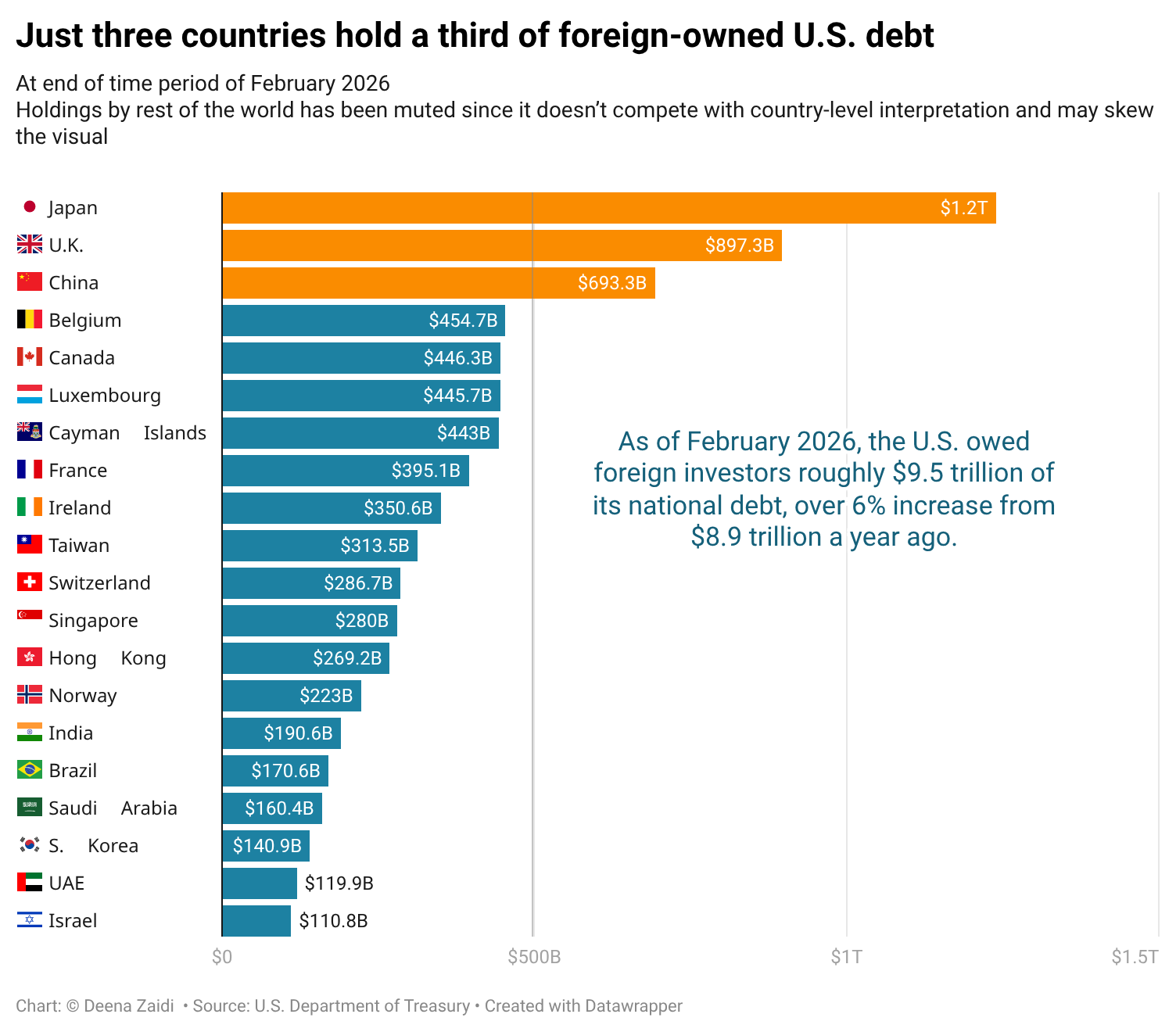
As the U.S. national debt approaches $39 trillion, foreign investors play a key role…. though ownership is concentrated among a few countries.
Data & financial journalist covering global economics and policy
As the U.S. national debt approaches $39 trillion, foreign investors play a key role…. though ownership is concentrated among a few countries.

Oil and gas might not be the only commodities vulnerable to the disruptions in the Strait of Hormuz. Fertilizers are at particular risk, as their supplies get choked at the strait, a critical shipping corridor for a third of the world’s fertilizer shipments.

Ship traffic through the Strait of Hormuz is falling sharply as vessels avoid the Gulf following U.S.–Israel strikes on Iran, pushing oil prices to a 19-month high on fears of supply disruptions.
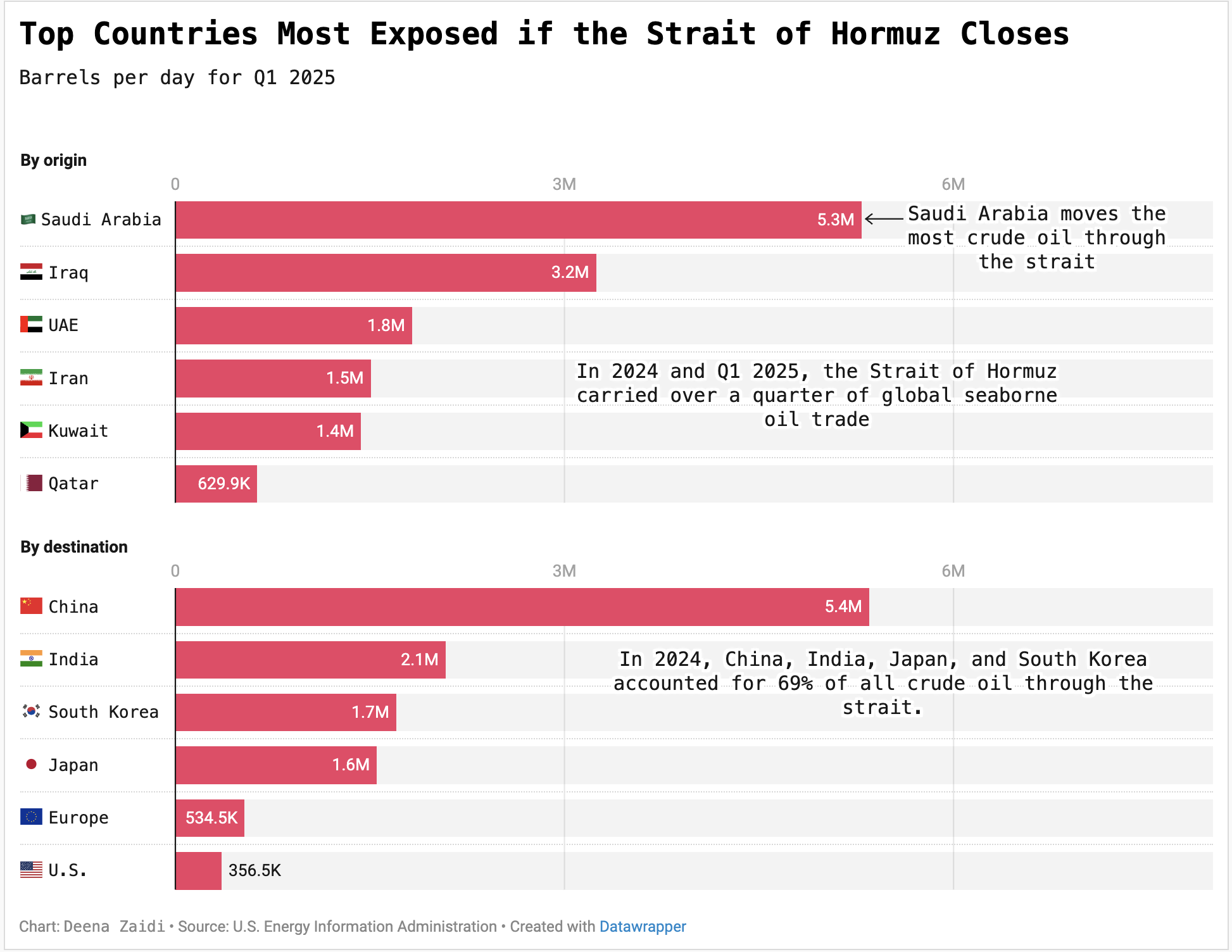
Over a quarter of global seaborne oil flows through the Strait of Hormuz—making Asia’s top economies especially vulnerable to any disruption.