The U.S., Canada and Mexico are jointly hosting the 2026 FIFA World Cup, but IMF data shows a wide gap in GDP per capita across the three economies.

Data & financial journalist covering global economics and policy
The U.S., Canada and Mexico are jointly hosting the 2026 FIFA World Cup, but IMF data shows a wide gap in GDP per capita across the three economies.

The curious case of the 2% inflation target and why most central banks won’t let it go.
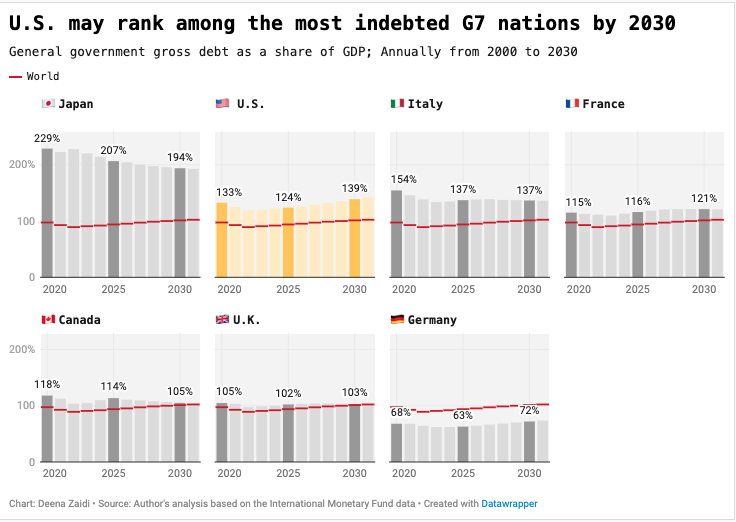
The cost of borrowing is already choking crucial public spending across many developing economies. But now it is triggering wider concerns.
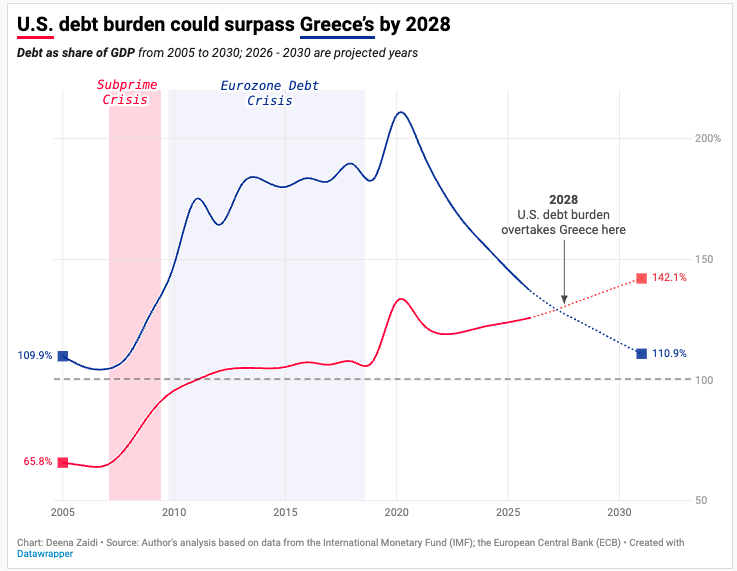
The country once mocked for fiscal collapse may soon look more disciplined than the world’s largest economy.