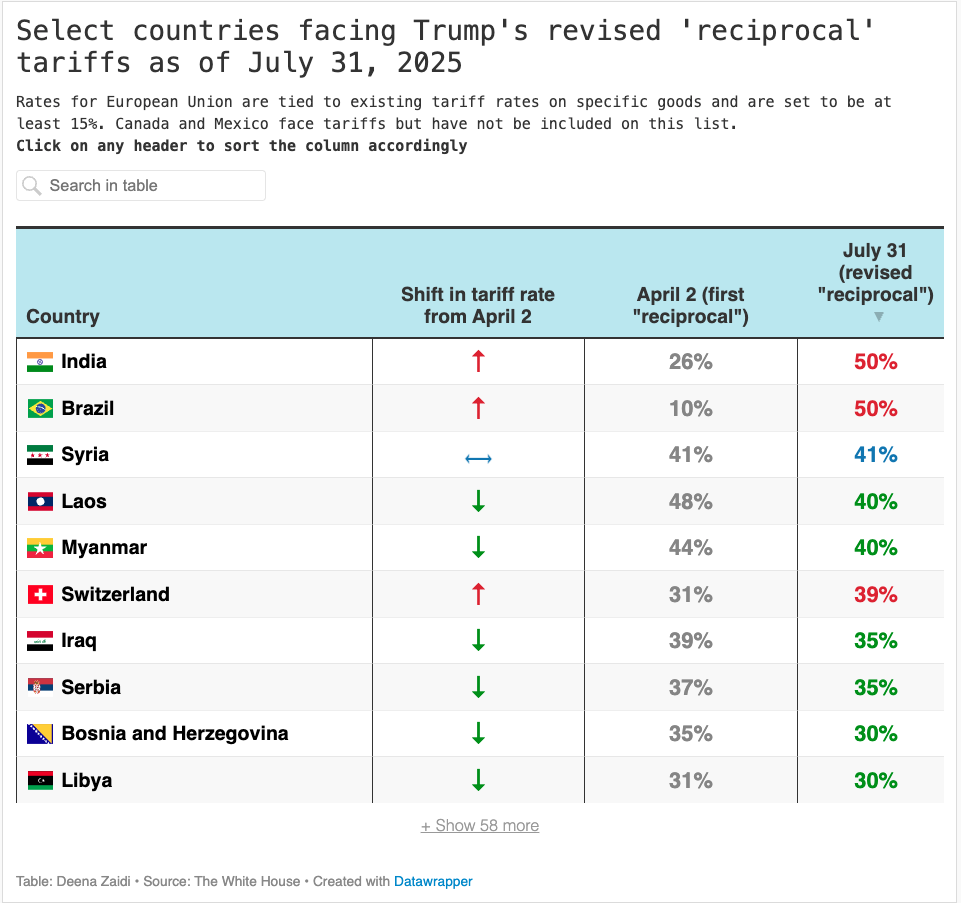
After months of negotiations, pauses, and delays, a sweeping new tariff slate took effect Thursday—marking a new era in U.S. trade policy, with import rates reaching their highest levels since the Great Depression.
Data and Financial Journalist
After months of negotiations, pauses, and delays, a sweeping new tariff slate took effect Thursday—marking a new era in U.S. trade policy, with import rates reaching their highest levels since the Great Depression.
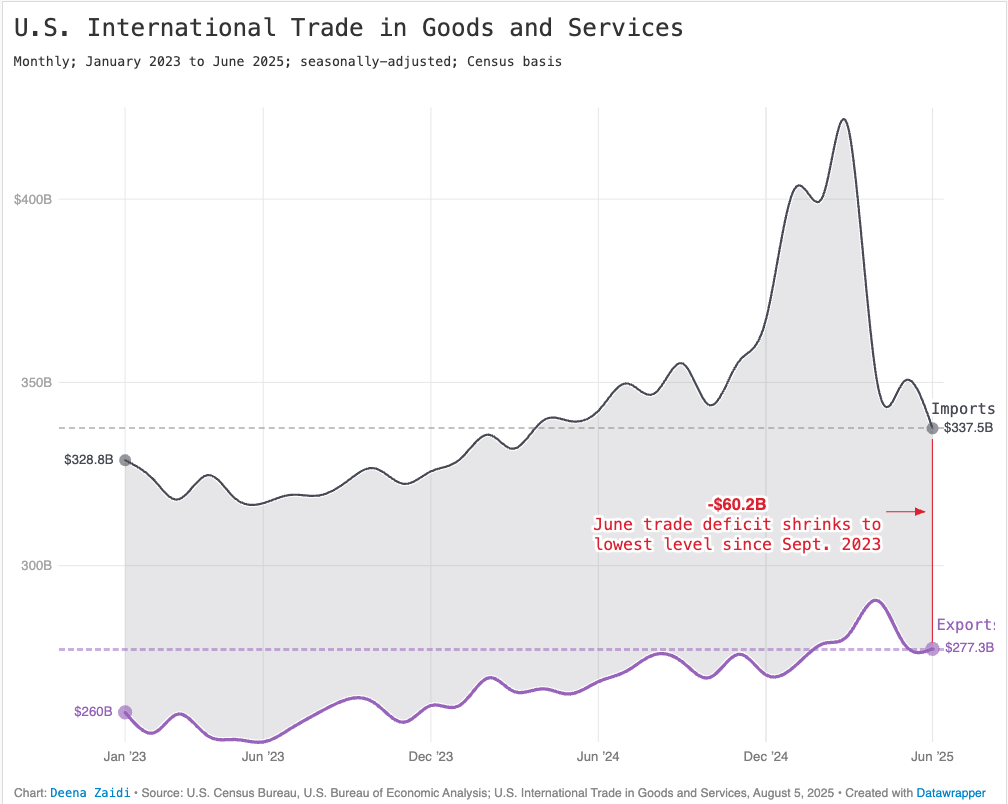
U.S. trade deficit shrank to $60.2B in June 2025, the lowest since Sept. 2023, driven by falling imports and rising tariff uncertainty.
April’s trade deficit plunged from a revised $138.3 billion in March to $61.6 billion, driven by a 16% drop in imports that reversed the pre-“liberation day” spike.
The U.S. reported major trade deficits in February 2025 with China, the EU, and Mexico—just as President Trump’s latest round of ‘reciprocal’ tariffs took effect. Here’s a breakdown of who’s facing the steepest penalties, and why some key allies like Canada and Mexico are exempt.