The U.S. and Japan have taken the rare step of intervening together in the currency market, buying yen after the battered currency’s prolonged decline against the U.S. dollar.
Data & financial journalist covering global economics and policy
The U.S. and Japan have taken the rare step of intervening together in the currency market, buying yen after the battered currency’s prolonged decline against the U.S. dollar.

The U.S., Canada and Mexico are jointly hosting the 2026 FIFA World Cup, but IMF data shows a wide gap in GDP per capita across the three economies.

The curious case of the 2% inflation target and why most central banks won’t let it go.
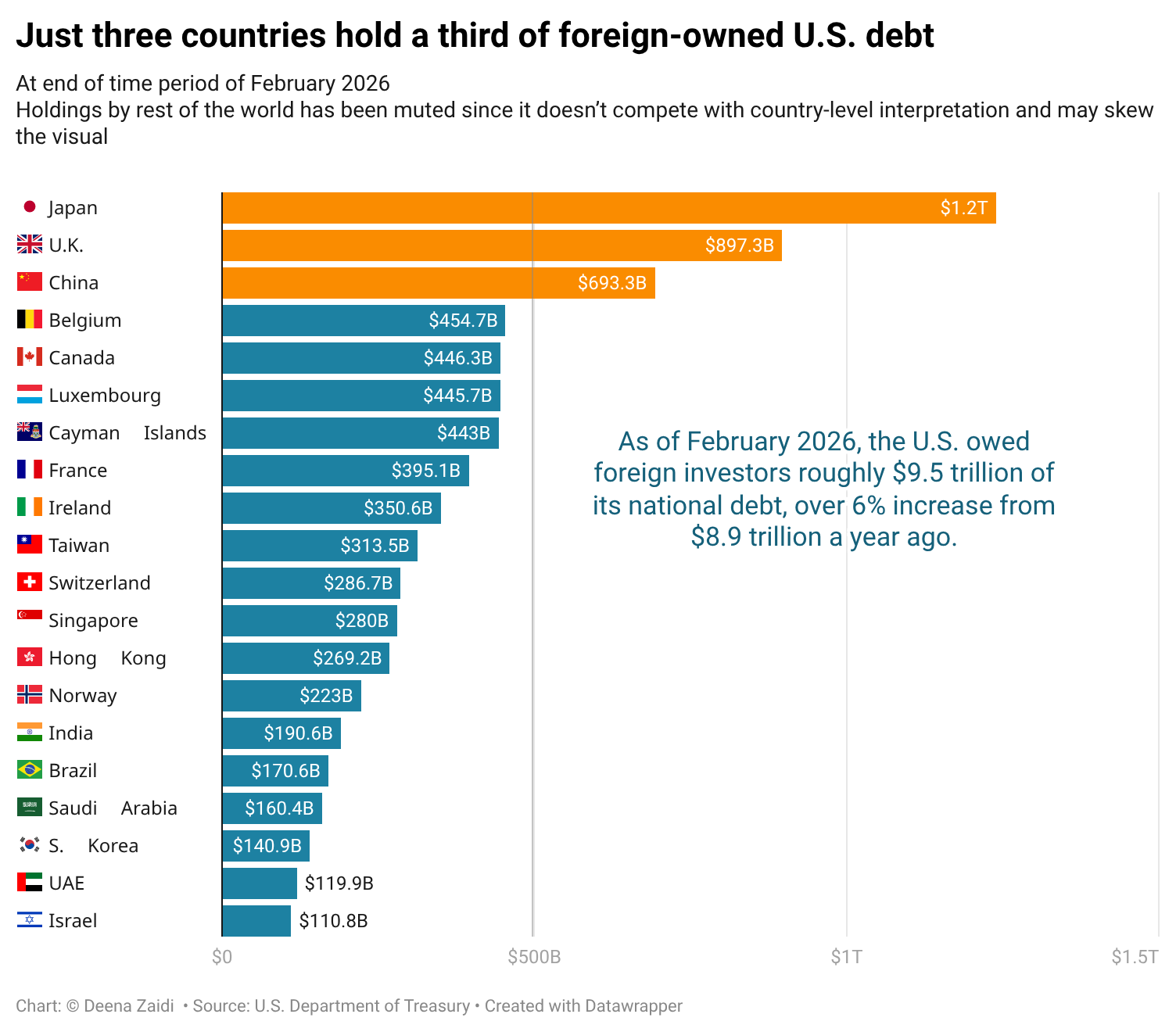
As the U.S. national debt approaches $39 trillion, foreign investors play a key role…. though ownership is concentrated among a few countries.