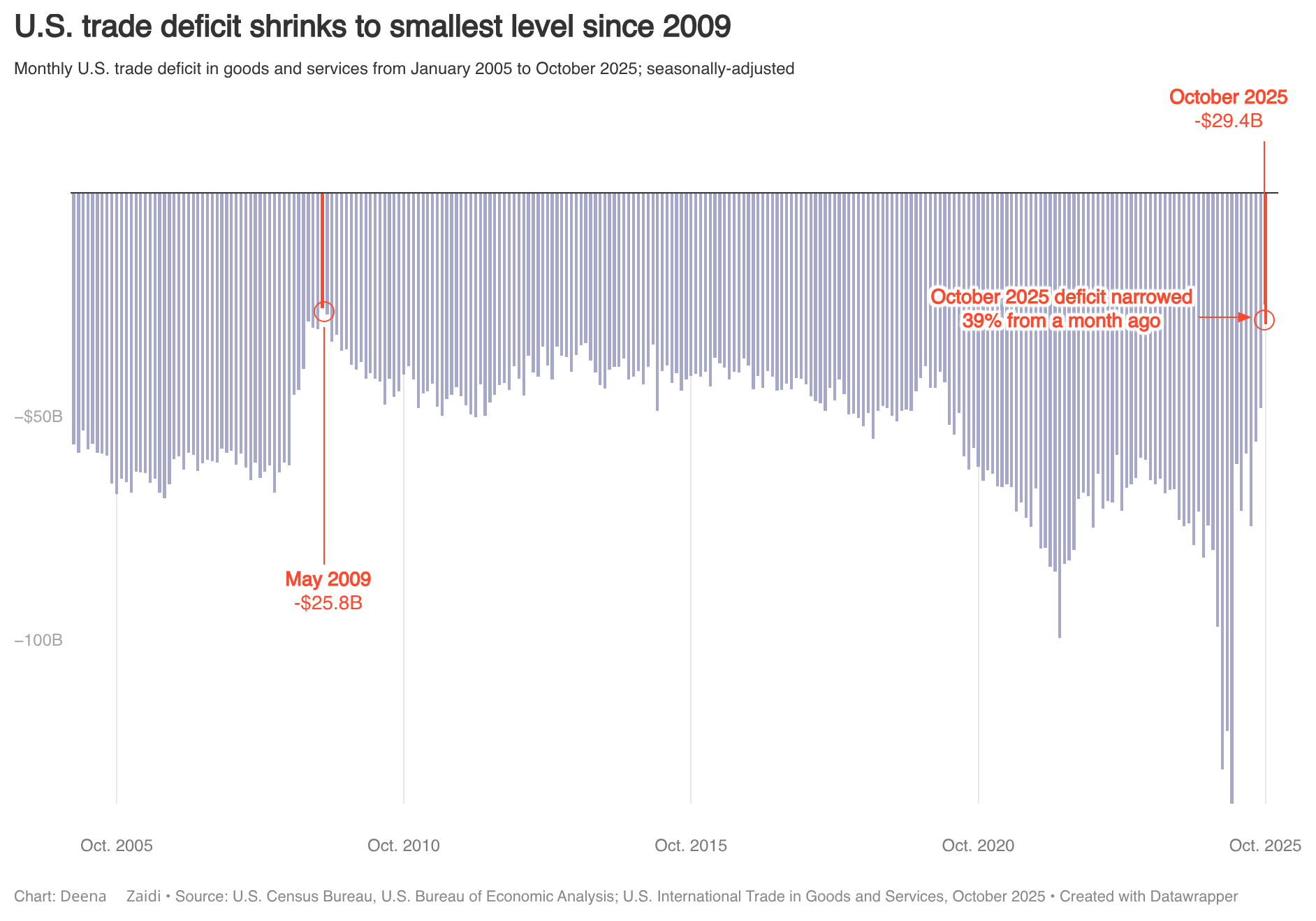
October’s U.S. trade deficit was $29.4 billion last year, down by 39% from a revised $48.1 billion in September, according to the data released Tuesday by the U.S. Census Bureau and the U.S. Bureau of Economic Analysis.
The month also captures the smallest trade gap since May 2009
Trade gap
The tightening trade gap reflects an improvement in export demand as well as a slowing import growth.
October’s trade gap — the smallest deficit in more than 16 years — underscores global trade patterns shift amid supply chain adjustments and dwindling consumer spending.
October imports fell 3% from $342 billion in September to $331 billion.
Imports of goods on a Census basis decreased $11.5 billion. Main drivers for the change were
-
- Increase in consumer goods (especially pharmaceuticals)
- Industrial supplies and materials (including crude oil, nuclear fuel, and petroleum products)
- Decrease in capital goods such as computer accessories, telecommunications and computers
Imports of services, on the other hand, increased $1.1 billion to $76.3 billion in October. Major drivers were
-
- Increase in travel
- Increase in business services
- Increase in insurance services
- Decrease in transport
October exports of goods increased $7.1 billion to $195.9 billion in October.
Exports of goods on a Census basis increased $7.2 billion.
-
- Industrial supplies and materials which include non monetary gold and other precious metals
- Other goods
- Consumer goods including pharmaceutical preparations
Exports of services increased $0.7 billion to $106.1 billion in October.
-
- Increase in travel increased $0.4 billion.
- Increase in charges for the use of intellectual property
- Increase in other business services
- Decrease in government goods and services