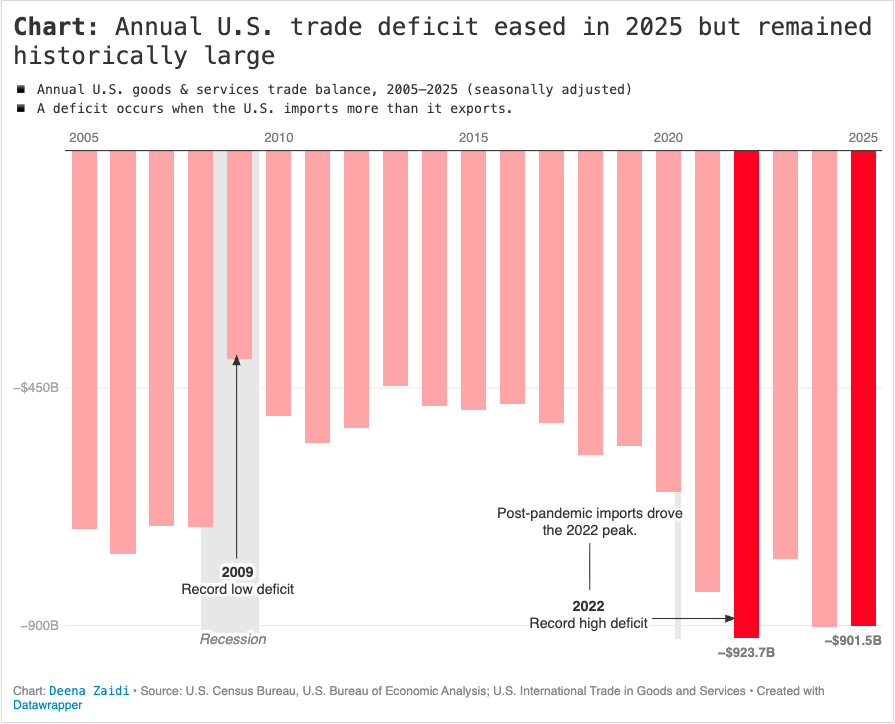
The U.S. trade deficit narrowed in 2025 but was historically elevated, underscoring the country’s persistent reliance on foreign goods even as global supply chains stabilized.
Combined goods and services deficit improved from the record $923.7 billion gap in 2022 — driven by a surge in post-pandemic imports — to about $901.5 billion in 2025.
While smaller, the deficit remains among the largest on record and far wider than pre-pandemic levels, according to the data released by the Commerce Department on Thursday.
The monthly picture tells a similar story. The U.S. goods trade deficit reached a fresh high in March 2025, as imports continued to outpace exports despite tariffs and industrial policy aimed at boosting domestic manufacturing.
By late 2025, monthly goods imports hovered around $280 billion, compared with roughly $180 billion in exports, highlighting the structural imbalance between U.S. consumption and production.
What’s driving the gap
- Strong U.S. consumer demand continues to fuel imports.
- A strong dollar makes foreign goods cheaper for Americans while weighing on exports.
- Industrial policy and tariffs have reshaped supply chains but haven’t significantly reduced the deficit.
- Energy exports and services trade help offset the goods gap but not enough to close it.