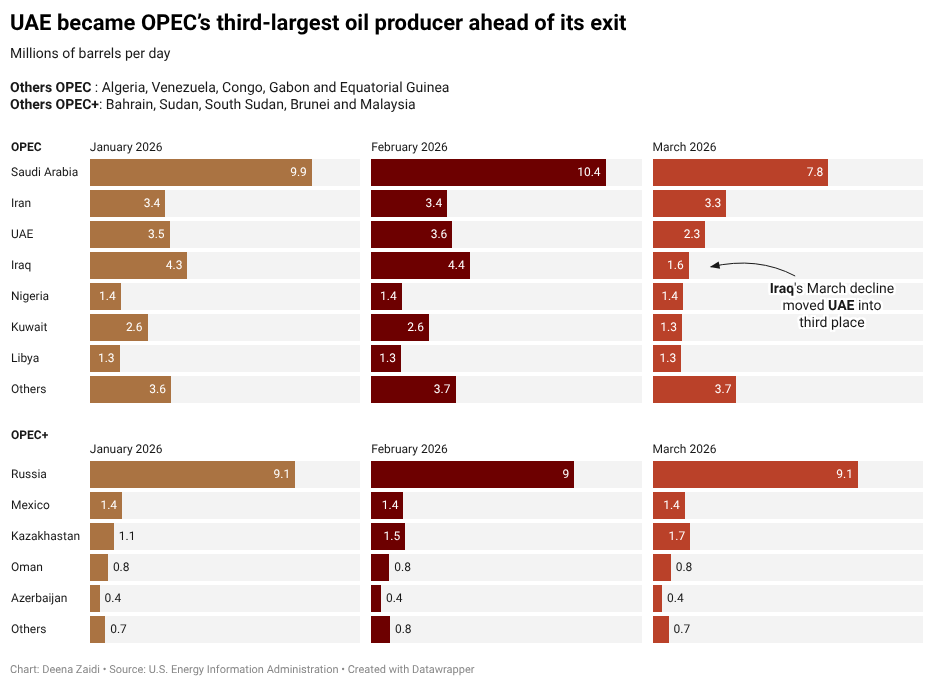
OPEC is no stranger to exits. But UAE’s exit could mean a fundamental geopolitical shift in the Middle East (and the oil markets).
Data & financial journalist covering global economics and policy
OPEC is no stranger to exits. But UAE’s exit could mean a fundamental geopolitical shift in the Middle East (and the oil markets).
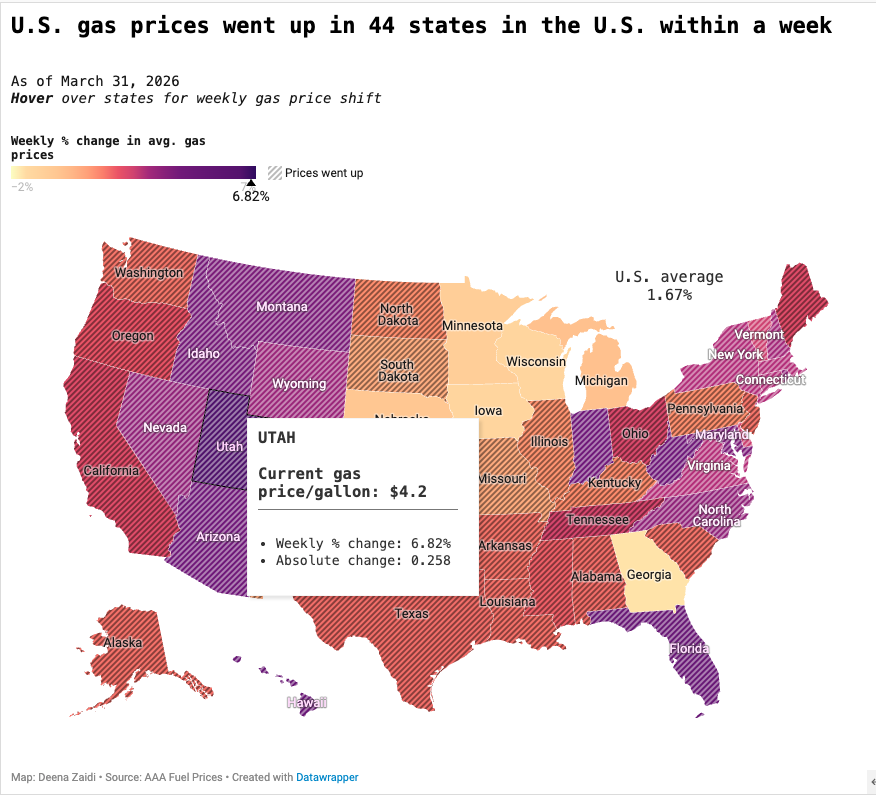
The U.S. is a net oil exporter but that does not shield it from global economic shocks.
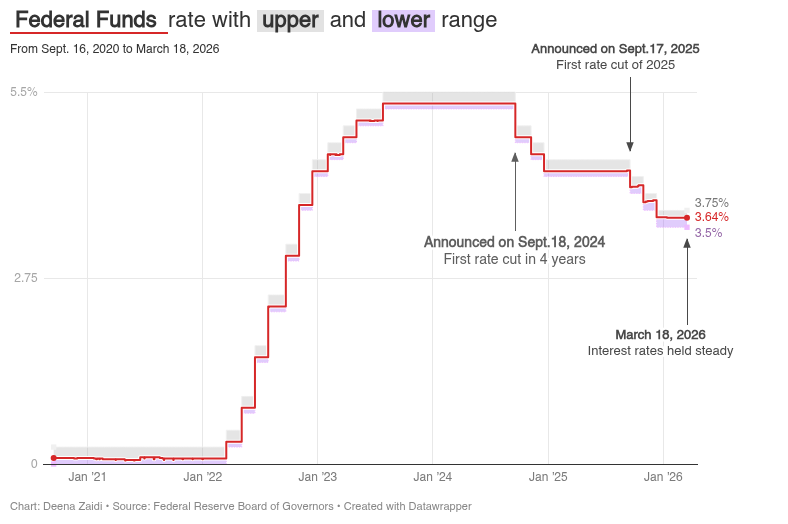
The Federal Reserve’s latest projections show steady economic growth, persistent inflation above 2% and a slower path to interest rate cuts.

Ship traffic through the Strait of Hormuz is falling sharply as vessels avoid the Gulf following U.S.–Israel strikes on Iran, pushing oil prices to a 19-month high on fears of supply disruptions.