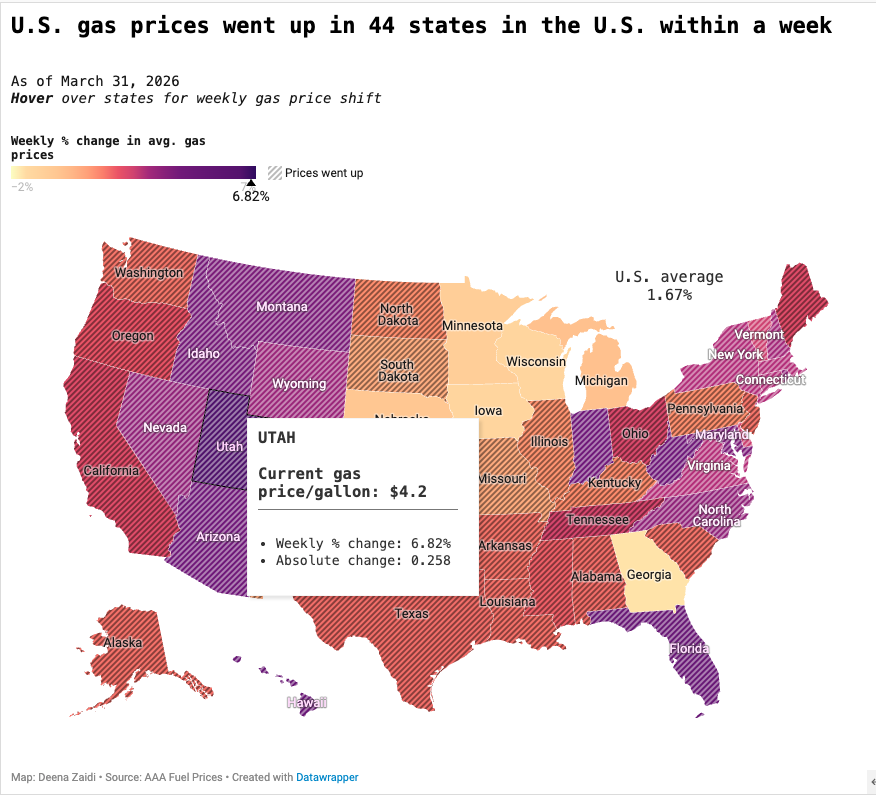
Interactive map is attached in the story
The U.S. national average gas prices per AAA Fuel Prices rose 13.31%, from approximately $3.53 on February 22 to over $4 per gallon by end of March, marking the highest rates since 2022. In the past, U.S. average for gasoline went past $5 a gallon in June 2022, four months after Russia-Ukraine war and world leaders imposed sanctions against Russia, a leading oil producer.
Now, after the U.S. and Israel launched a joint attack on Iran on Feb. 28, the cost of crude oil has been going up.
Data
According to AAA, over the past week, gas prices went up across 44 states in the U.S.
The biggest weekly change was seen in Utah, with over 6.82% rise in gas prices, from 3.94 on March 23 to 4.199 per gallon on March 31.
Reason?
Oil is the key ingredient in gasoline. Gas prices often rise quickly when oil prices increase but tend to fall more slowly when they decline, a phenomenon known as rockets and feathers.
The disruption to the supply flow around the Strait of Hormuz has led to cuts from major oil producers across the Gulf. To avoid continued supply disruption, the 32 member nations of the International Energy Agency (IEA) pledged to carry out its largest ever oil stock release of 400 million barrels of oil from their emergency stockpiles.
Bottom line
The U.S. is a net oil exporter but that does not shield it from global economic shocks. As a globally traded commodity, the escalated geopolitical conflicts will disrupt the flow, eventually impacting food and gas prices
A prolonged war means expensive food and gas prices in the future, leading to higher inflation numbers and delayed interest rate cuts by the Fed.