The U.S. and Japan have taken the rare step of intervening together in the currency market, buying yen after the battered currency’s prolonged decline against the U.S. dollar.
Data & financial journalist covering global economics and policy
The U.S. and Japan have taken the rare step of intervening together in the currency market, buying yen after the battered currency’s prolonged decline against the U.S. dollar.
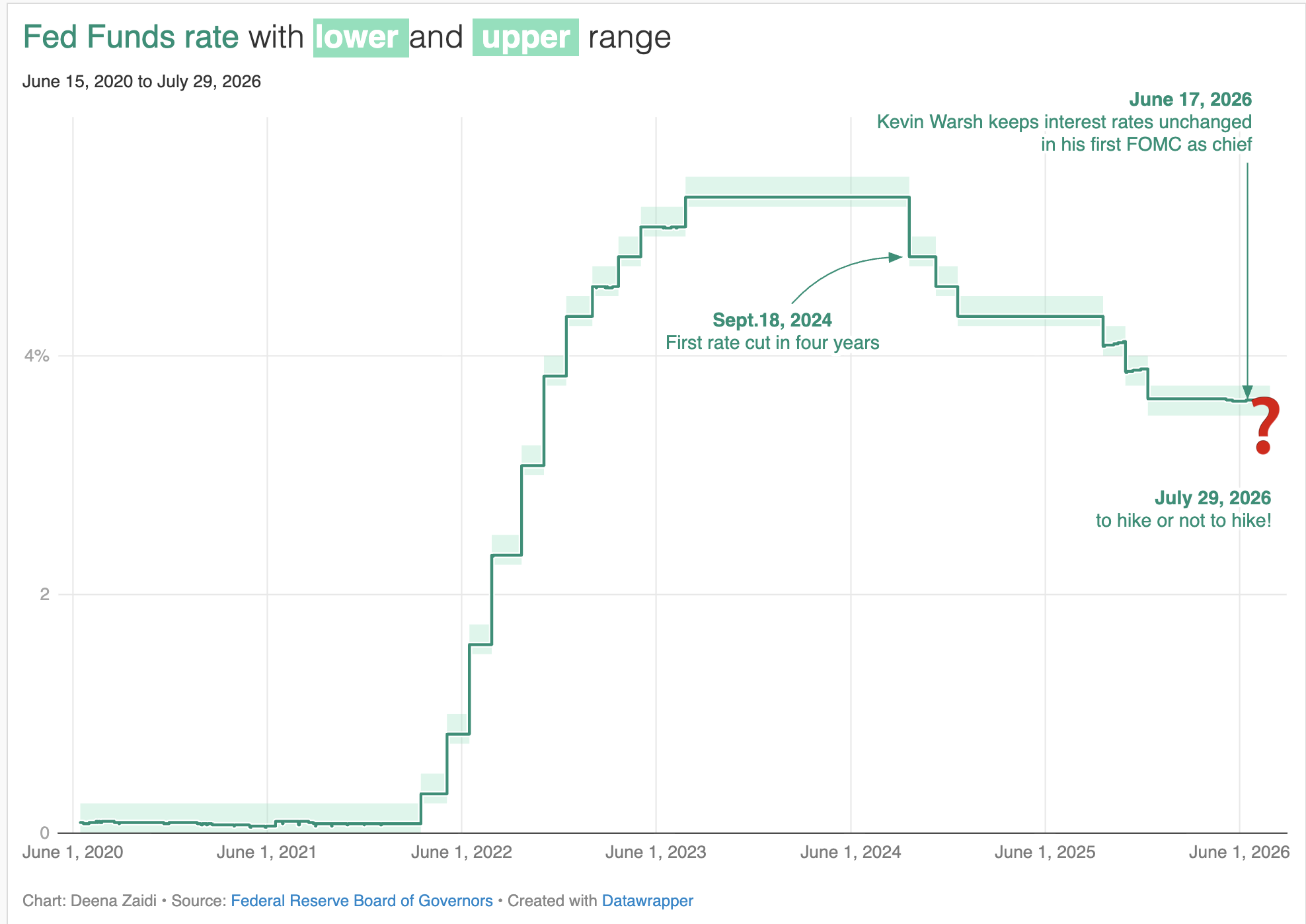
Federal Reserve Chair Kevin Warsh could deliver a major surprise today as policymakers conclude their two-day meeting. While most economists expect the Fed to keep its benchmark rate at 3.5% and 3.75%, inflation and energy-price pressures may mean a hike is on the table. Warsh has been pretty vocal about his “no tolerance” stance for…

The U.S., Canada and Mexico are jointly hosting the 2026 FIFA World Cup, but IMF data shows a wide gap in GDP per capita across the three economies.
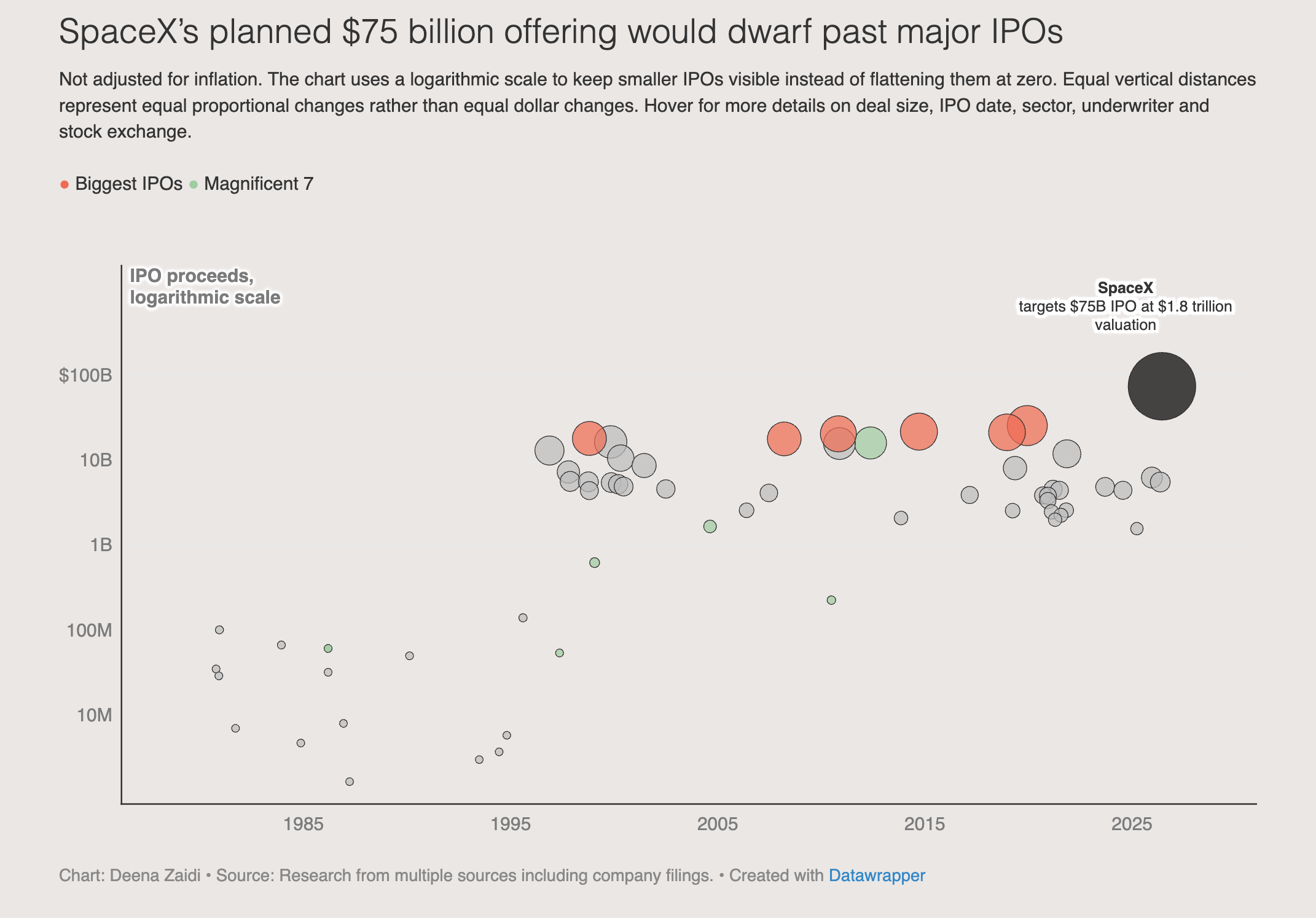
SpaceX’s planned $75 billion IPO would overshadow all IPOs in history, dwarfing Saudi Aramco, Alibaba, Meta and even the most valued company, Nvidia.