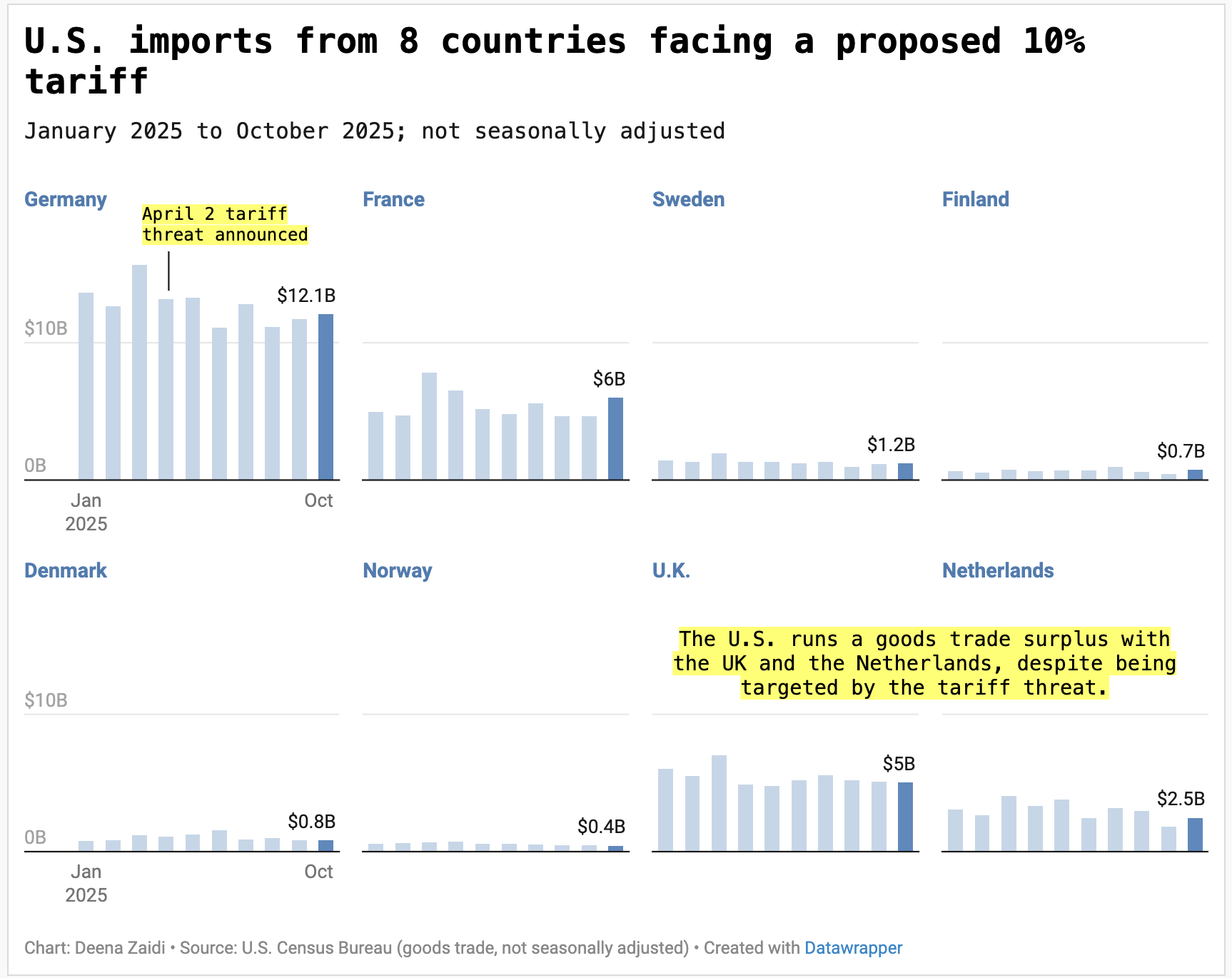
President Donald Trump said the U.S. will impose a 10% tariff on imports from eight European countries starting February 1, tying the move to opposition over Greenland.
Data & financial journalist covering global economics and policy
President Donald Trump said the U.S. will impose a 10% tariff on imports from eight European countries starting February 1, tying the move to opposition over Greenland.
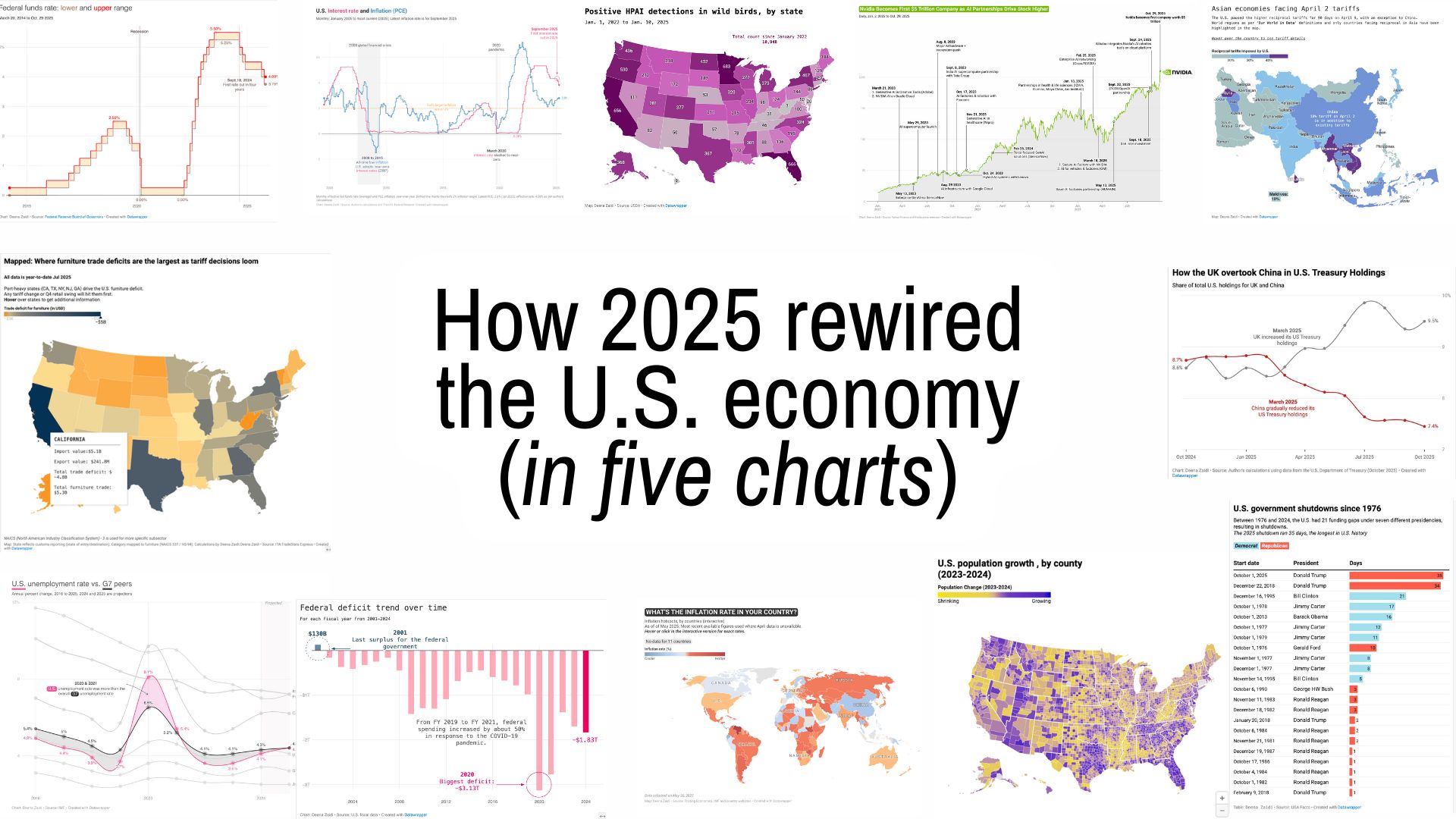
In 2025, the U.S. economy didn’t simply cool or rebound but changed in ways that were visible in the data itself.
A shutdown distorted inflation, tariffs reset global trade, U.S. debt buyers quietly swapped places, and food prices surged. I pick five charts that captured how policy and politics reshaped the American economy in 2025.
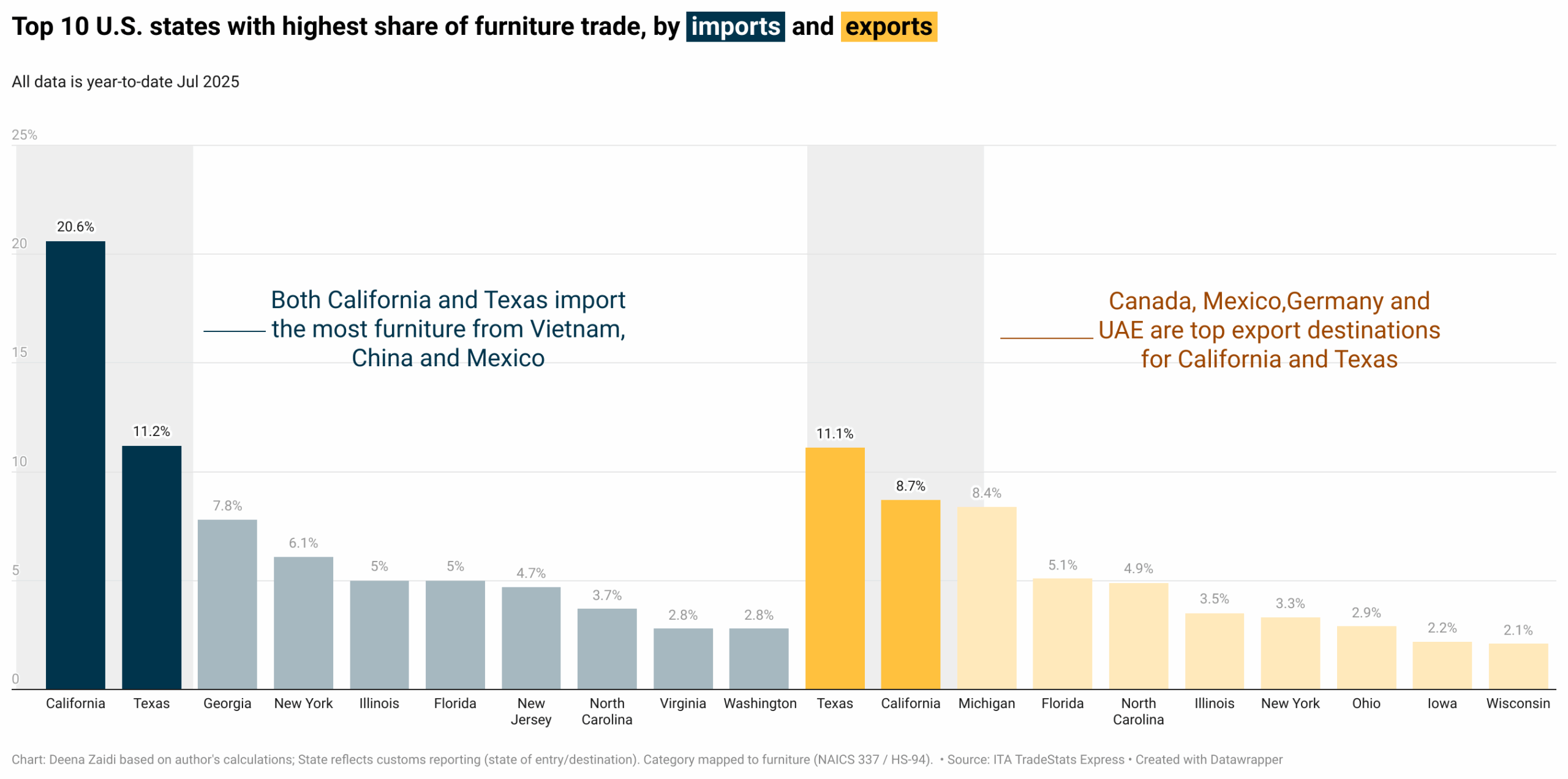
Beginning midnight, Oct. 14, 2025, imports of select wood and furniture items—including softwood, kitchen cabinets, bathroom vanities, and upholstered furniture—face new Section 232 tariffs, targeting imports of timber, wood products, furniture, and cabinetry.
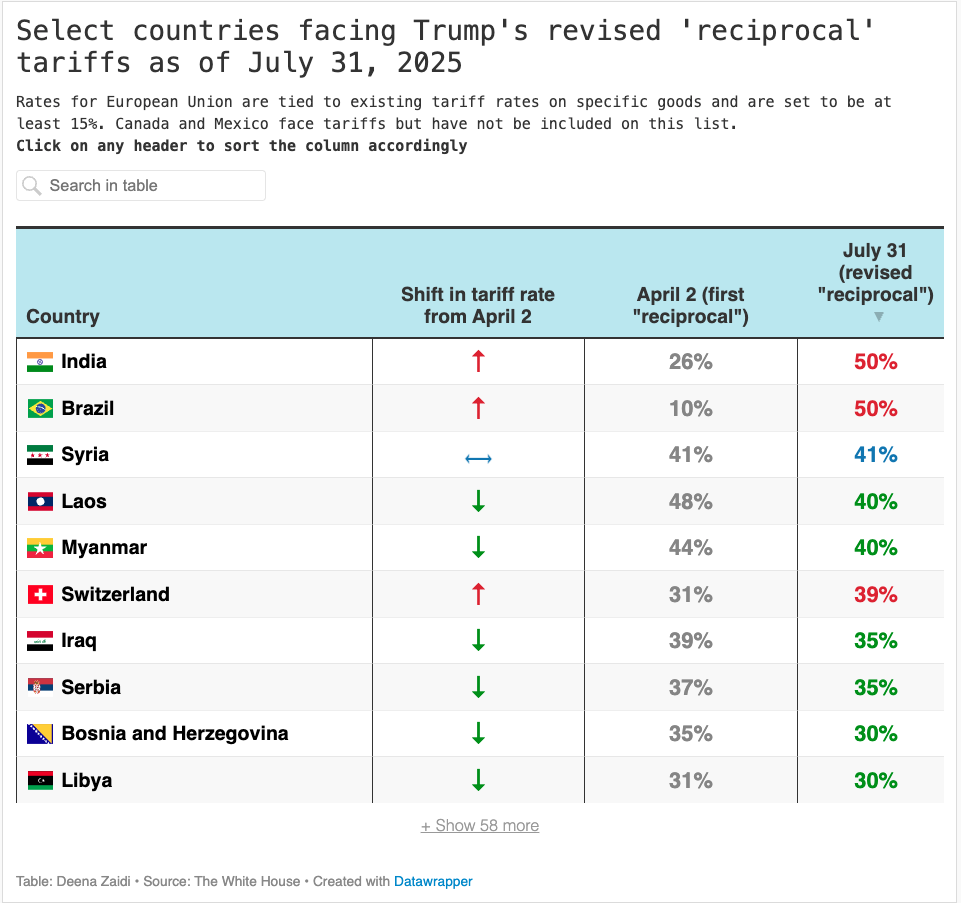
After months of negotiations, pauses, and delays, a sweeping new tariff slate took effect Thursday—marking a new era in U.S. trade policy, with import rates reaching their highest levels since the Great Depression.