The U.S. and Japan have taken the rare step of intervening together in the currency market, buying yen after the battered currency’s prolonged decline against the U.S. dollar.

Data & financial journalist covering global economics and policy
The U.S. and Japan have taken the rare step of intervening together in the currency market, buying yen after the battered currency’s prolonged decline against the U.S. dollar.
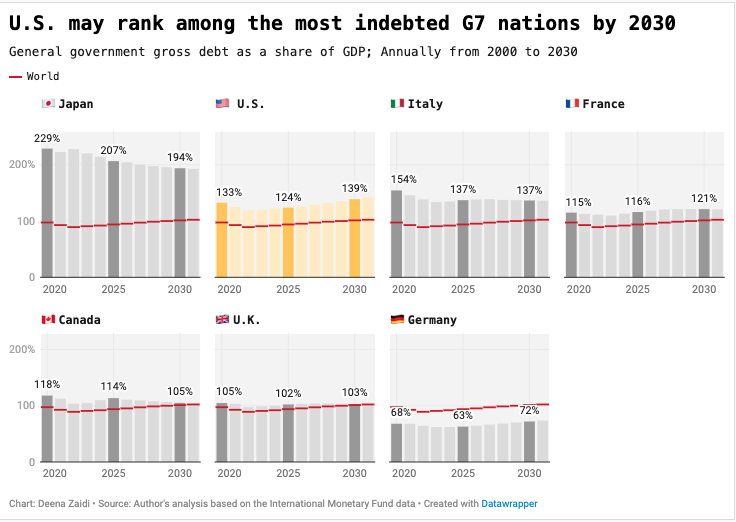
The cost of borrowing is already choking crucial public spending across many developing economies. But now it is triggering wider concerns.
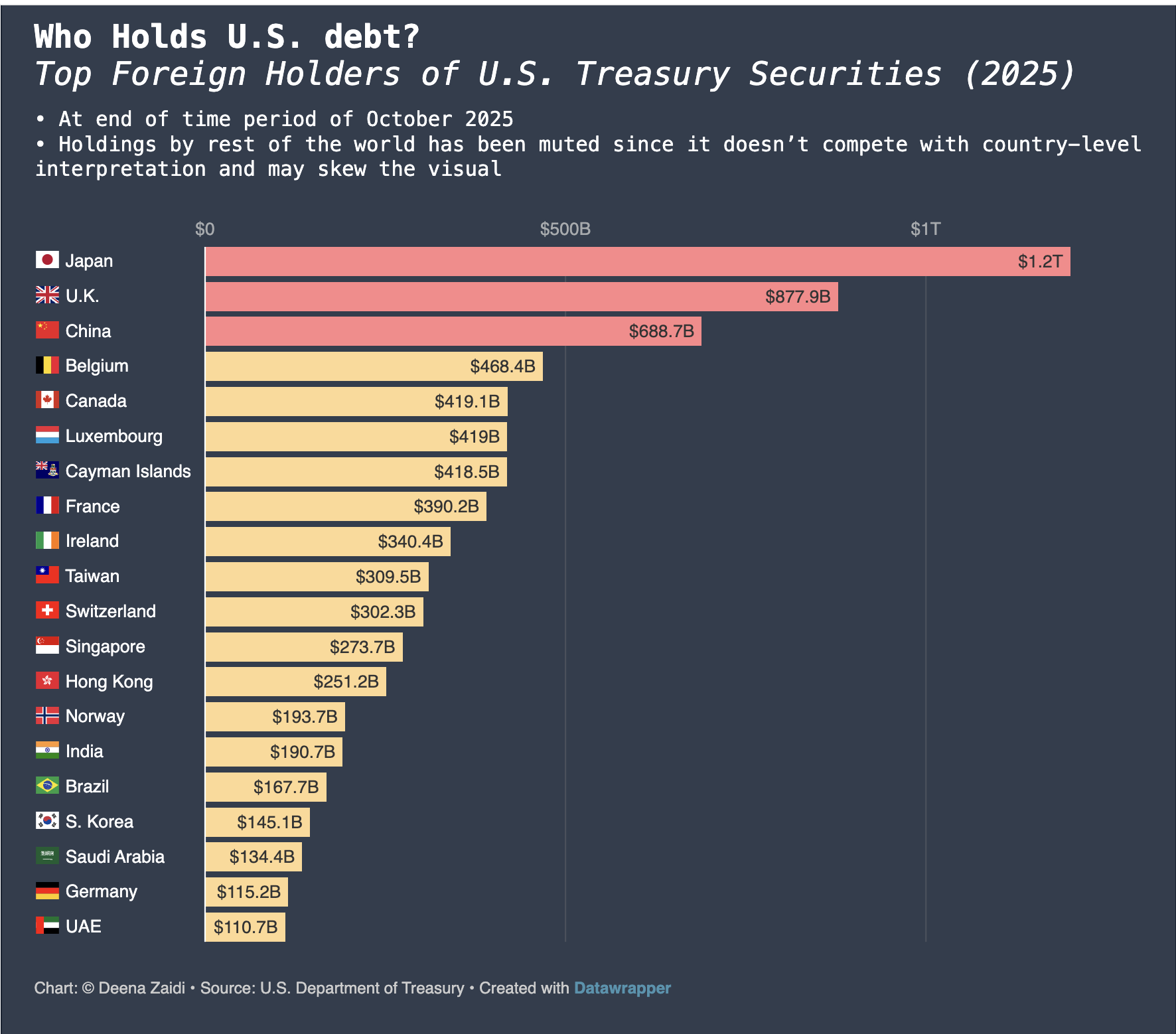
Foreign investors now hold more than $9 trillion in U.S. Treasurys, but growing purchases by advanced economies contrast with pullbacks by China and other emerging markets.
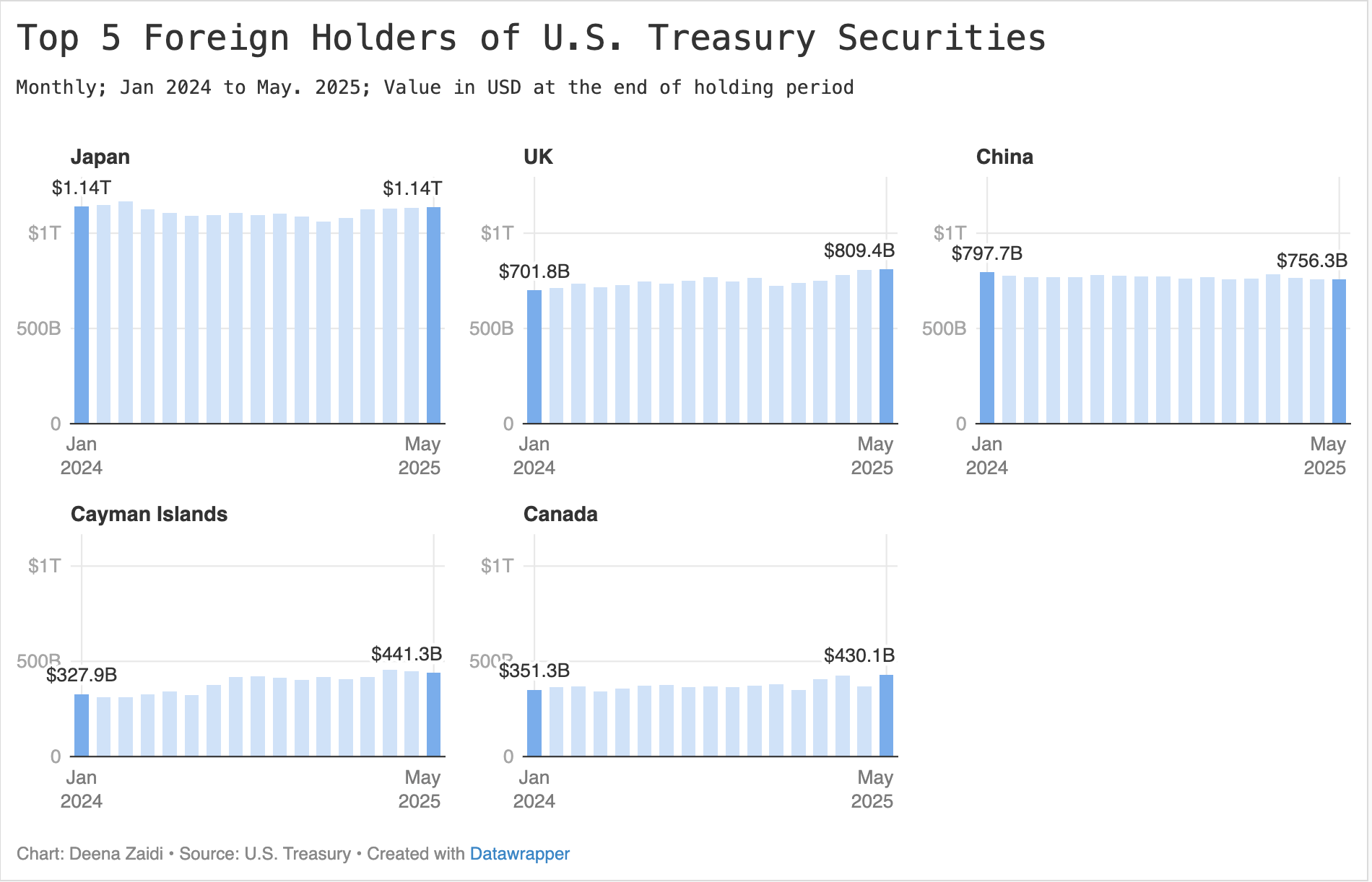
Canada’s rapid shift in foreign investment, China’s retreat, and the strong demand from Gulf and European nations capture the shifting alliances and risk appetites. Through 3 charts, I explain who holds America’s IOUs in a time of high deficits and global uncertainty —and how quickly that’s changing.