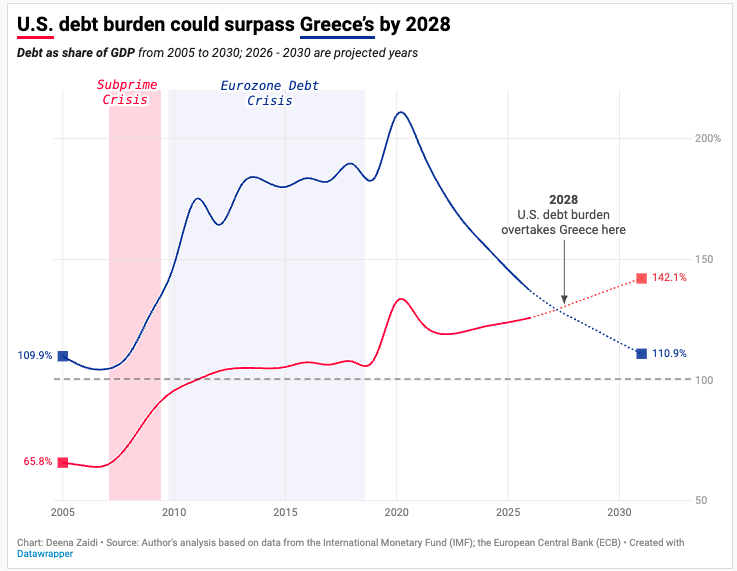
Once seen as the cautionary tale of sovereign debt, Greece is now projected to reduce its debt burden faster than the U.S., according to the International Monetary Fund.
The IMF data estimates that by 2028, the U.S. public debt is projected to surpass Greece’s debt burden, a striking reversal of one of the defining economic narratives of the post-financial-crisis era.
The U.S. debt rises to roughly 132% of GDP in 2028, while Greece’s debt ratio falls to around 125% as the latter continues unwinding the burden built up during its crisis years.
This gap is expected to widen through the end of the decade. By 2030, U.S. debt is projected near 142% of GDP, while Greece falls toward 111%.
Why it matters
Unlike Greece, the U.S. issues the world’s reserve currency and faces far greater borrowing flexibility.
But rising debt still carries consequences.
Higher borrowing needs can increase interest expenses, tighten budgets, intensify political fights over deficits and debt ceilings. Concerns around U.S. debt is growing as the U.S. faces persistent deficits, an aging population and higher interest rates than the ultra-low borrowing era of the 2010s.
Additionally, rising debt during the AI era, climate change and war would mean structural change risk, leaving little fiscal room for urgent needs such as unemployment support, disaster relief and emergency spending.
Bottom line
For years, Greece was the global symbol of debt excess. So much so that its fiscal crisis shook the entire Eurozone, triggering bailouts and forcing harsh austerity measures.
But by the end of this decade, America may have a bigger debt story to tell.
Read : Who holds U.S. debt?